
They Fought Because They Loved Us
This summer, two anniversaries have been on my mind.
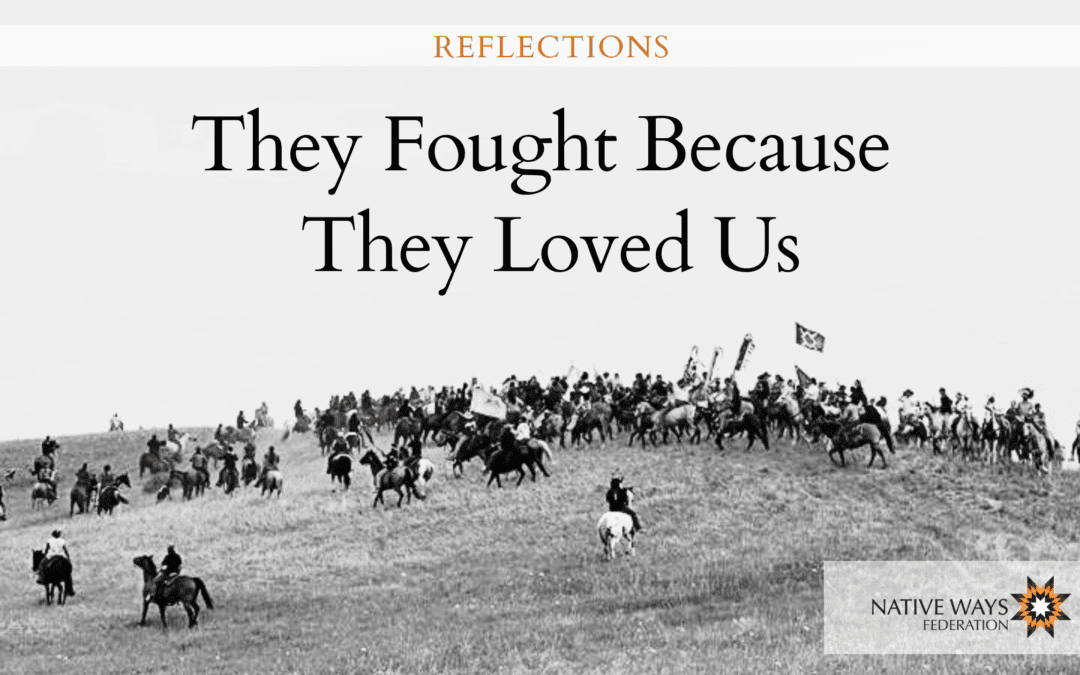
Across the United States, people are still commemorating 250 years since the signing of the Declaration of Independence. Just days before those celebrations began, I stood on the northern plains of Greasy Grass with my son, my family, and relatives from across Indian Country to mark the 150th anniversary of the Victory at Greasy Grass—known to many as the Battle of the Little Bighorn.
One anniversary marks the founding of the United States. The other reminds us that long before this country existed, our ancestors were already governing Nations, caring for these lands, and protecting the people they loved. Standing between these anniversaries, I found myself thinking less about history and more about inheritance and responsibility.
I traveled to Greasy Grass as a Dakota/Nakota woman, as the mother of a Lakota/Dakota/Nakota son, and as someone whose family’s story is woven into that place. Greasy Grass is not simply history to my family. We are here in part because of it. My son’s relatives rode with the Lakota, Dakota, Cheyenne, Arapaho, and others who defended their families and homelands there. Ourancestor, Dr. Charles Eastman (Ohiyesa), later helped preserve Native perspectives from that era, ensuring our stories would not be lost. My late husband’s relative, Amos Bad Heart Bull, interviewed Lakota participants and descendants and documented their first-hand accounts through extraordinary ledger art, creating one of the most important Native records of the battle.
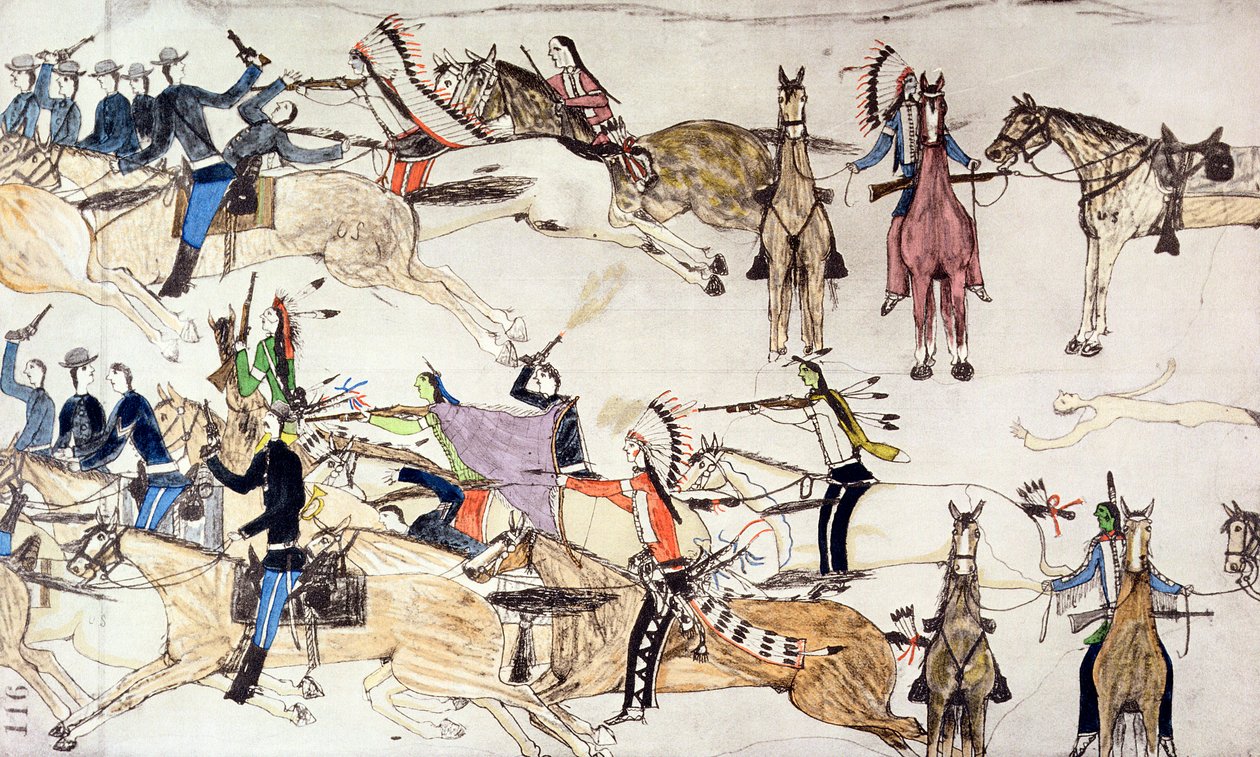
Art Depicting the Victory at Greasy Grass by Amos Bad Heart Bull.
Standing on those sacred lands, surrounded by relatives, I watched children laugh, horses thunder across the prairie, songs and speeches rise into the summer air, and remind us that memory is not confined to history books, it lives in our bodies, our families, and our responsibilities to one another. In that place, the distance between past and present seemed to disappear. I felt the enduring strength of our ancestors in the joy of our children, the resilience of our people in every song, and the unbroken thread of love and continuity that has carried us through generations. We are still here because they loved us enough to fight, and what we do today will shape the lives of those yet unborn.
One hundred and fifty years ago, our ancestors stood together to defend their people, their homelands, and their way of life. They did not fight because they hated others.
They fought because they loved us.
They loved us enough to ensure that one day their descendants would still gather on that land, still speak our languages, still sing our songs, and still know who we are. We exist because of them.
As the United States reflects on 250 years, Tribal Nations, Native communities and families are reflecting on anniversaries of our own, such as the Victory at Greasy Grass. These anniversaries are reminders of survival, resistance, renewal, and resurgence.
Our history did not begin with the founding of the United States. Nor did it end with battles, broken treaties, boarding schools, or federal policies intended to erase us. Our story is not one of disappearance. It is one of endurance and perseverance. Our Nations endure. Our ceremonies continue. Our languages are being reclaimed. Our artists are creating. Our leaders are governing. Our entrepreneurs are building. Our young people are growing up with opportunities many generations were denied, and more and more are imagining futures our ancestors hoped might one day be possible. That simple truth is both ordinary and extraordinary.
We are still here.
As I watched my son and my nieces walk the same landscape where their ancestors fought, and were victorious, I realized that Greasy Grass is not only a story about what our ancestors defended. It is also a story about what they entrusted to us. Every generation inherits responsibilities. Our ancestors fought so that we could exist today. Our responsibility is to ensure that future generations do far more than survive. They deserve every opportunity to dream and flourish.
Every generation inherits responsibilities. Our ancestors fought so that we could exist today. Our responsibility is to ensure that future generations do far more than survive. They deserve every opportunity to dream and flourish.
One hundred and fifty years ago, victory meant defending our people on the battlefield. Today, victory looks different. Victory is a child speaking their ancestral language. Victory looks likehealthy families, thriving Tribal economies, protected sacred places, strong Native governments, healthy Elders, confident young leaders, and communities determining their own futures.
That work is happening every day across Indian Country.
At Native Ways Federation, we have the privilege of witnessing these victories every day through Native-led nonprofits. They are revitalizing Indigenous languages, strengthening Tribal economies, mentoring Native youth, caring for Elders, protecting sacred places, and creating solutions rooted in their communities’ own knowledge and priorities.
This work rarely makes national headlines. Yet it represents one of the most hopeful movements unfolding in this country today. As people reflect on the first 250 years of the United States, I find myself asking a different question: What if one measure of the next 250 years is whether the Indigenous peoples of these lands are fully supported and resourced to flourish?
For generations, Native communities have been expected to overcome displacement, exclusion, and chronic underinvestment with only a fraction of the resources available to others (Native Ways Federation & Melvin Consulting PLLC, 2023). Native-led nonprofits continue to receive only a tiny share of philanthropic funding despite their extraordinary leadership, deep community trust, and proven impact. Imagine what becomes possible when that changes.
Imagine if we chose to invest in Native leadership—not out of charity or obligation, but because thriving Tribal Nations and Native communities strengthen the future we all hold in trust for the generations yet unborn.
When Native nations and communities thrive, it signals something much bigger. It means we are learning that relationships are stronger than domination. That stewardship is wiser than extraction. That community is more enduring than individual gain. That our responsibilities extend beyond ourselves to those who will come after us. These are teachings Native people have carried since time immemorial. They are also values that can help guide all of us as we shape the future together.
Our ancestors loved us enough to fight. Now it is our turn to love future generations enough to continue that momentum by building the world they dreamed possible.
For Native peoples, this means carrying forward what was entrusted to us by strengthening our Nations, reclaiming our languages, protecting our homelands, and investing in future generations. For everyone who shares these lands, it means recognizing that the flourishing of Tribal Nations, communities, and families is inseparable from the future of this country. If this vision resonates with you, support Native-led organizations, build relationships with Tribal Nations, and advocate for policies that strengthen Native futures. If you are looking for a trusted way to invest directly in Native-led nonprofits across Indian Country, visit GiveNative.org. Every gift is more than a donation. It is an investment in Native leadership, Native solutions, and the future our ancestors fought to protect.
The United States may be commemorating 250 years, but our Peoples have cared for these lands since time immemorial. The story we write next belongs to all of us. At one time, it was expected by some that we would disappear. May the next 250 years be remembered as the time when Native Nations and communities were not merely expected to survive but are fully empowered to flourish. Because when the Native people of these lands thrive, the future is stronger for every generation that follows.
Recent Comments